
Jul 25, 2026Manufacturing Insights
Cycling Helmet OEM Process: From Design Concept to Mass Production
Explore the complete OEM cycling helmet manufacturing process, including shell forming, EPS molding, assembly, customization, and quality inspection.
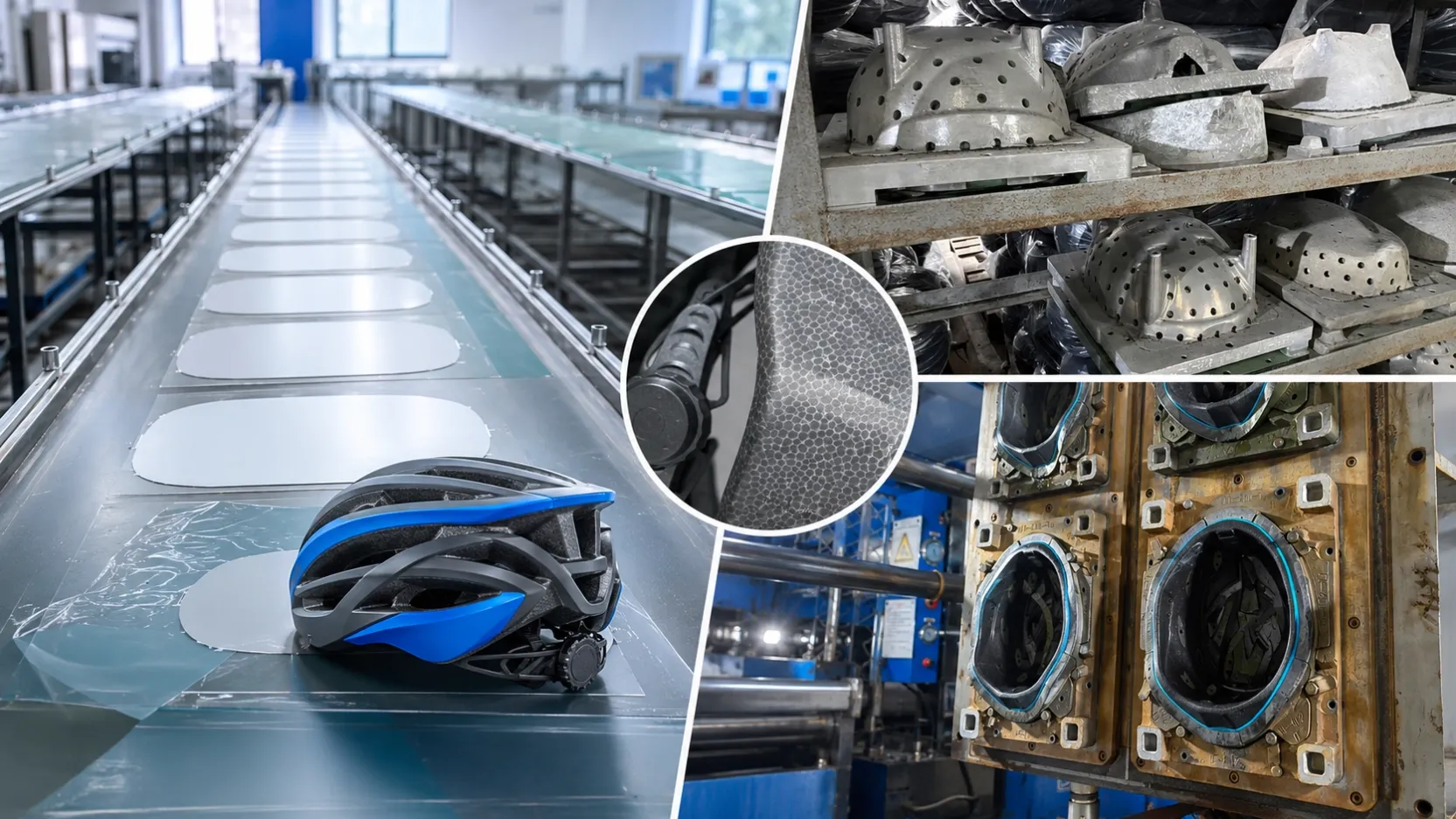
Cycling Helmet OEM Process: From Design Concept to Mass Production
For brands entering the cycling helmet market, understanding the OEM production process helps reduce development risks and improve communication with manufacturers.
A professional helmet supplier normally manages several production stages from material preparation to final shipment.
1. Product Selection and Design Confirmation
The OEM process usually starts with product selection.
Buyers may choose:
- Existing factory models
- Modified designs
- Fully customized helmets
During this stage, suppliers confirm:
- Helmet structure
- Target market
- Safety standard requirements
- Color options
- Branding requirements
2. PC Shell Manufacturing
The outer shell is usually made from polycarbonate material.
The shell production process includes:
- Material preparation
- Thermoforming
- Surface finishing
- Logo printing
The shell provides external protection and creates the final appearance of the helmet.
3. EPS Foam Production
EPS foam is the main impact absorption component.
Manufacturers control:
- Foam density
- Shape accuracy
- Bonding quality
Different helmet categories may require different internal structures.
4. Assembly and Inspection
After shell and foam production, helmets move into assembly.
The process includes:
- Shell and EPS bonding
- Strap installation
- Adjustment system installation
- Final inspection
Quality control ensures every helmet meets production requirements before shipment.
5. Supporting Global Helmet Brands
For overseas buyers, OEM success depends on communication, quality control, and supplier coordination.
Fonyon helps customers connect with suitable manufacturers and manage the process from product selection to delivery.